
Mario Vargas Llosa: “The Tapeworm” (from Letters to a Young Novelist)
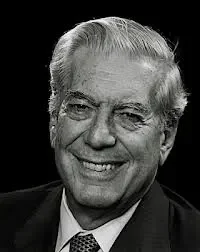
Peruvian-Spanish writer and Nobel Laureate Mario Vargas Llosa.
“Your decision to claim your literary leanings as your destiny must lead you into servitude, into nothing less than slavery. To put it graphically, you’ve just done what some nineteenth-century ladies, concerned about their weight and determined to recover their slender silhouettes, seem to have done: you’ve swallowed a tapeworm. Have you ever come across anyone who sheltered that terrible parasite in his gut? I have, and I assure you those ladies were heroines, martyrs to beauty. In the early sixties, in Paris, a great friend of mine, José María, a young Spanish painter and filmmaker, was invaded by such a creature. Once the tapeworm establishes itself inside an organism, it merges with it, feeds off it, grows and is nourished at its expense; the worm is very difficult to expel from the body it thrives on and effectively colonizes. José María kept getting thinner, even though he was constantly forced to eat and drink (milk, especially) to satisfy the gnawing of the creature housed inside him, since if he did not, his suffering would become intolerable. But everything he ate and drank was for the tapeworm’s benefit, not his. One day, when we were talking in a little Montparnasse bistro, he surprised me with the following confession: ‘We do so many things together. We go to theaters, exhibitions, bookstores, we spend hours and hours discussing politics, books, films, mutual friends. And you think I do these things for the same reason you do, because I enjoy them. But you’re wrong. I do them all for it, for the tapeworm. That’s how it seems to me: that my whole life is lived no longer for my sake but for the sake of what I carry inside me, of which I am now no more than a servant.’
“Ever since then, I’ve liked to compare the lot of the writer to that of my friend José María when he had the tapeworm inside him. The literary vocation is not a hobby, a sport, a pleasant leisure-time activity. It is an all-encompassing, all-excluding occupation, an urgent priority, a freely chosen servitude that turns its victims (its lucky victims) into slaves. Like José María’s tapeworm, literature becomes a permanent preoccupation, something that takes up your entire existence, that overflows the hours you devote to writing and seeps into everything else you do, because the literary vocation feeds off the life of the writer just as the tapeworm feeds off the bodies it invades. As Flaubert said: ‘Writing is just another way of living.’ In other words, those who make this enchanting and engrossing vocation their own don’t write to live but live to write.”
—Letters to a Young Novelist, translated from the Spanish by Natasha Wimmer (2003)